On 3 January 2026, the United States launched a military strike on Venezuela and captured President Nicolás Maduro and his wife Cilia Flores. The world woke from New Year celebrations to confrontation unthinkable by the standards that had governed international relations since 1945. Yet what made this extraordinary event more remarkable still was markets’ muted response.
This disconnect between geopolitical shock and market response reveals something profound about the current investment environment. Either markets have become inured to disruption, or they are dangerously mispricing the risks accumulating across multiple fronts simultaneously.
Trump and his administration made clear that access to Venezuelan oil was a core reason for the action. The operation represented the first major forcible regime change by the United States since Iraq. American control of Venezuelan oil reserves also introduces a new variable for investors in emerging markets and commodity-linked economies, where political developments can quickly influence growth, currencies and capital flows. In such settings, outcomes tend to be less linear and more uneven across countries and sectors, placing greater emphasis on careful security selection, regional insight and active risk management rather than relying solely on broad market exposure.
President Donald Trump later said his administration will take action on Greenland “whether they like it or not.” This represents not merely negotiating pressure but a fundamental challenge to the post-war alliance system. Denmark and its European allies in NATO have pushed back, reiterating that Greenland is not for sale. The threat to NATO cohesion at precisely the moment when European security faces Russian pressure creates dangerous uncertainty.
Beginning on 28 December 2025, demonstrations erupted across multiple cities in Iran amid widespread unrest against the Islamic Republic government and a deepening economic crisis. At least 490 protesters have been killed and more than 10,000 people arrested over the past 15 days, according to the US-based human rights group HRANA. For investors, Iranian instability carries implications extending beyond that nation’s borders. Regime change in Tehran could prove transformative for Middle Eastern oil markets and regional security, yet the transition process itself poses acute risk of conflict and disruption to energy supplies through the Strait of Hormuz.
Despite escalating geopolitical risk, financial markets show limited signs of stress. The S&P 500 continues to trade at all-time highs, and volatility remains below twelve-month averages. This equanimity suggests either remarkable confidence or dangerous complacency. Markets have historically struggled to price geopolitical risk in advance, leaving them vulnerable to abrupt repricing when perceived probabilities change.
Gold provides the clearest signal that some investors recognise elevated risk. Spot gold rose as much as 2.9% on Monday, climbing above $4,455 an ounce. J.P. Morgan Global Research forecasts prices to average $5,055/oz by the final quarter of 2026, rising toward $5,400/oz by the end of 2027, driven by central bank diversification and persistent geopolitical uncertainty.
The U.S. is unwinding its own global order and will be the principal source of global risk this year, according to Eurasia Group. The American-led order that provided predictability appears to be dissolving without replacement architecture emerging. The Russia-Ukraine conflict grinds into its fourth year with no resolution visible, while NATO and Russia edge toward more dangerous confrontations in Europe.
For investors, several principles deserve consideration. First, avoid panic and remember that the fundamental error during geopolitical stress is transforming temporary uncertainty into permanent capital impairment through ill-timed selling. Second, remain invested with appropriate diversification. History shows that attempting to time geopolitical events proves futile. Third, consider increased allocation to safe assets like gold, which could surge 15-30% in 2026 under stress scenarios. Fourth, recognise that geopolitical risk now represents a structural feature rather than episodic shock, favouring themes like defence, cybersecurity, energy security, and supply chain resilience.
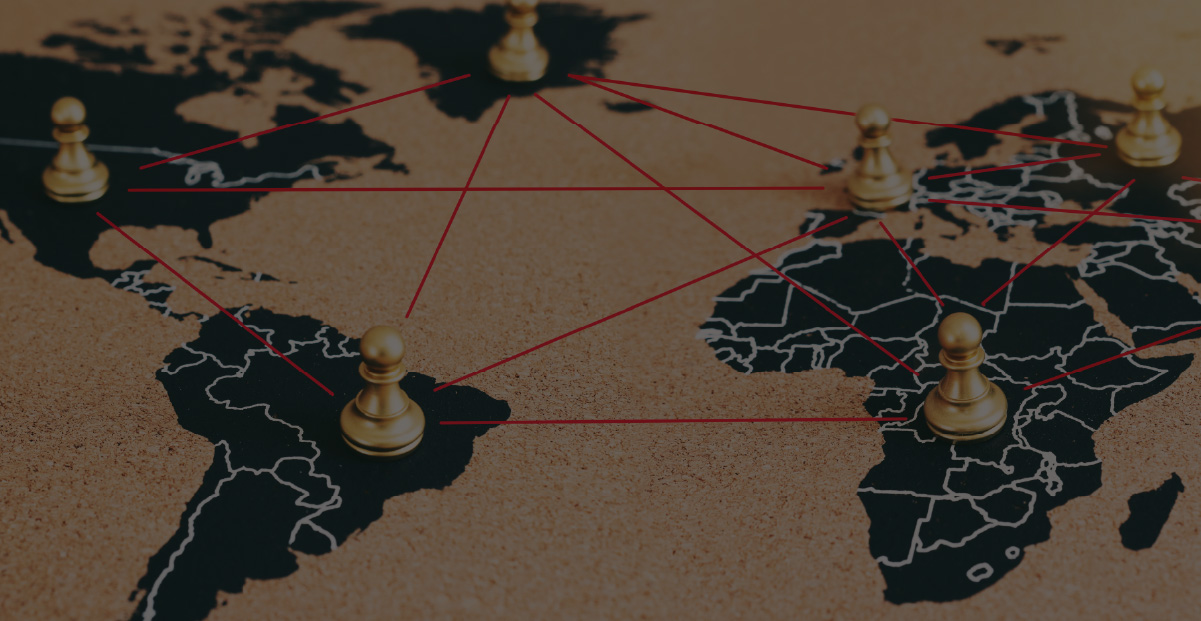
The current moment demands clear-eyed assessment of risks that markets may be underpricing. Venezuela, Greenland, Iran, Russia, and China represent interconnected stresses testing the international system’s capacity for managing conflict. The days when American power guaranteed a broadly stable international environment appear to be ending.
For investors, this means accepting heightened uncertainty as the baseline condition. Portfolio construction must account for scenarios previously considered too extreme to price. Yet accepting elevated risk does not mean abandoning markets entirely. It means maintaining discipline, diversifying intelligently, and recognising that the greatest opportunities often emerge precisely when others succumb to fear.
1. Venezuela: Operation Absolute Resolve
The military action on January 3, 2026, has been widely documented as a turning point in regional stability.
- Event & Capture: On January 3, 2026, U.S. forces conducted “Operation Absolute Resolve,” capturing Nicolás Maduro and Cilia Flores in Caracas. They were subsequently transported to New York to face narco-terrorism charges.
2. Greenland and the Challenge to NATO
The statements regarding Greenland have created significant friction within the North Atlantic alliance.
- Trump’s Quote: On January 11/12, 2026, President Trump stated the U.S. would take Greenland “one way or the other” and that action would be taken “whether they like it or not.” * White House Position: Press Secretary Karoline Leavitt confirmed that using the military to acquire the territory is “always an option.”
3. Iran: Protests and Casualties
The unrest that began on December 28, 2025, has escalated into one of the deadliest periods of civil disobedience in recent Iranian history.
- Casualty Figures: While HRANA reported at least 483–490 deaths and over 10,000 arrests by mid-January, other outlets like Time and Iran International suggest the toll could be as high as 2,000 to 6,000 following a violent 48-hour crackdown between January 8–10.
4. Market Data: S&P 500 and Gold
Despite the turmoil, traditional equities have remained resilient while gold has reached unprecedented heights.
- S&P 500: As of early January 2026, the S&P 500 reached all-time highs, closing near 6,966.
- Gold Prices: Spot gold rose to roughly $4,455/oz in early January.
- J.P. Morgan Forecast: J.P. Morgan Global Research forecasts gold to average $5,055/oz by Q4 2026 and $5,400/oz by the end of 2027.
5. Geopolitical Outlook: Eurasia Group
- Top Risk #1: The Eurasia Group’s “Top Risks 2026” report identifies the United States as the principal source of global risk, describing the administration’s actions as a “political revolution” that is actively unwinding the post-war global order.
- Source: Eurasia Group – Top Risks 2026
Disclaimer: The views expressed in this article are those of the author at the date of publication and not necessarily those of Dominion Capital Strategies Limited or its related companies. The content of this article is not intended as investment advice and will not be updated after publication. Images, video, quotations from literature and any such material which may be subject to copyright is reproduced in whole or in part in this article on the basis of Fair use as applied to news reporting and journalistic comment on events.


