On 28 February 2026, Israel and the United States launched Operation Epic Fury, nearly 900 strikes in the first twelve hours, targeting Iran’s leadership, nuclear programme, missile sites and air defences. The assassination of Supreme Leader Ali Khamenei marked the most dramatic opening salvo. Now in its tenth day, the conflict has deepened significantly. Israel’s attacks on Iran’s energy infrastructure have pushed the war into what Tehran describes as a “new phase,” with Iranian strikes hitting targets in Dubai, Abu Dhabi, Doha and Beersheba, and the US embassy in Kuwait struck and closed indefinitely. A US submarine has sunk an Iranian warship in the Indian Ocean. The cost to the US alone has been estimated at roughly $1 billion per day.
Mojtaba Khamenei has been named the country’s new supreme leader, with hardliners swiftly rallying behind him. Trump has made plain he regards this as unacceptable and intends to play a direct role in selecting Iran’s next leader. Iran’s foreign minister has rejected any prospect of a ceasefire, and a senior IRGC official warned that any ship attempting to traverse the Strait of Hormuz would be targeted. The US says Iran’s ballistic missile attacks have fallen by 90% since day one, a sign of degraded capability rather than restraint.
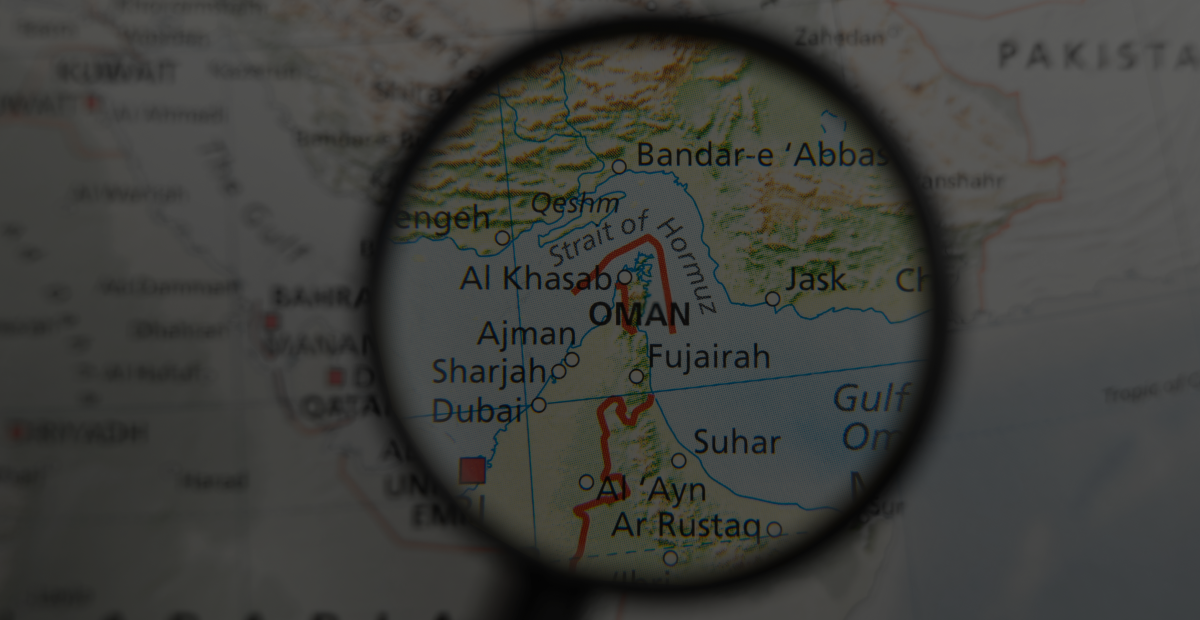
The Strait of Hormuz remains effectively closed, and the consequences have escalated well beyond early projections. Global oil prices have crossed $100 per barrel for the first time since Russia’s 2022 invasion of Ukraine, with US futures surging as high as $113 and Brent hitting $114 at the session peak. The US national average petrol price reached $3.41 per gallon by the weekend, up 43 cents in a single week. Qatar’s Minister of Energy has warned that all regional producers could soon be forced to declare force majeure, with prices potentially reaching $150 a barrel. The G7 finance ministers are set to discuss a coordinated release of strategic reserves, aligned with the International Energy Agency. Trump has so far resisted tapping the Strategic Petroleum Reserve, posting that short-term oil prices are “a very small price to pay” for security.
Financial markets have moved from cautious to alarmed. Asian stocks fell sharply on Monday: Japan’s Nikkei dropped more than 5%, South Korea’s KOSPI fell 6%, and S&P 500 futures declined 1.7%. Early hopes that markets had priced in a swift resolution have faded. Wall Street has begun pricing in a prolonged conflict as both sides expand strikes to critical infrastructure. Chatham House economists estimate that oil sustained around $100 per barrel for the full year could push global inflation roughly one percentage point above pre-conflict forecasts, with GDP growth 0.25–0.4 percentage points lower.
The political picture has deteriorated alongside the economic one. A CNN poll found nearly 60% of respondents disapprove of US military action in Iran, while a Fox News poll found 61% of voters disapprove of Trump’s handling of the economy. Democrats are seizing on the economic fallout of a war launched, by cruel irony, by a president who campaigned explicitly against Middle Eastern adventurism. With midterms approaching, elevated energy prices and rising consumer costs represent an acute political vulnerability for Republicans.
History offers some comfort to long-term investors. The S&P 500 has on average risen 3.4% in the six months following major geopolitical shocks. But it would be dishonest to pretend the picture looks as it did a week ago. The economic shock is no longer merely a risk; it is already underway. Each passing day without de-escalation narrows the window in which it can be absorbed without lasting damage.
In times of extreme geopolitical volatility, the most critical asset an investor possesses isn’t their capital, it’s their temperament. While the headlines suggest a world in flux, history shows that panic-selling during conflict often locks in losses just as the market begins its eventual recovery. To navigate this crisis, prioritize liquidity and diversification over speculation. Ensure you have enough cash reserves to cover short-term needs so you aren’t forced to sell depreciated assets at a discount. If your risk tolerance allows, look for high-quality companies with strong balance sheets that have been unfairly dragged down by broader market fear, but avoid “revolving door” trades in volatile commodities like oil unless you have a high threshold for risk.
Disclaimer: The views expressed in this article are those of the author at the date of publication and not necessarily those of Dominion Capital Strategies Limited or its related companies. The content of this article is not intended as investment advice and will not be updated after publication. Images, video, quotations from literature and any such material which may be subject to copyright is reproduced in whole or in part in this article on the basis of Fair use as applied to news reporting and journalistic comment on events.


