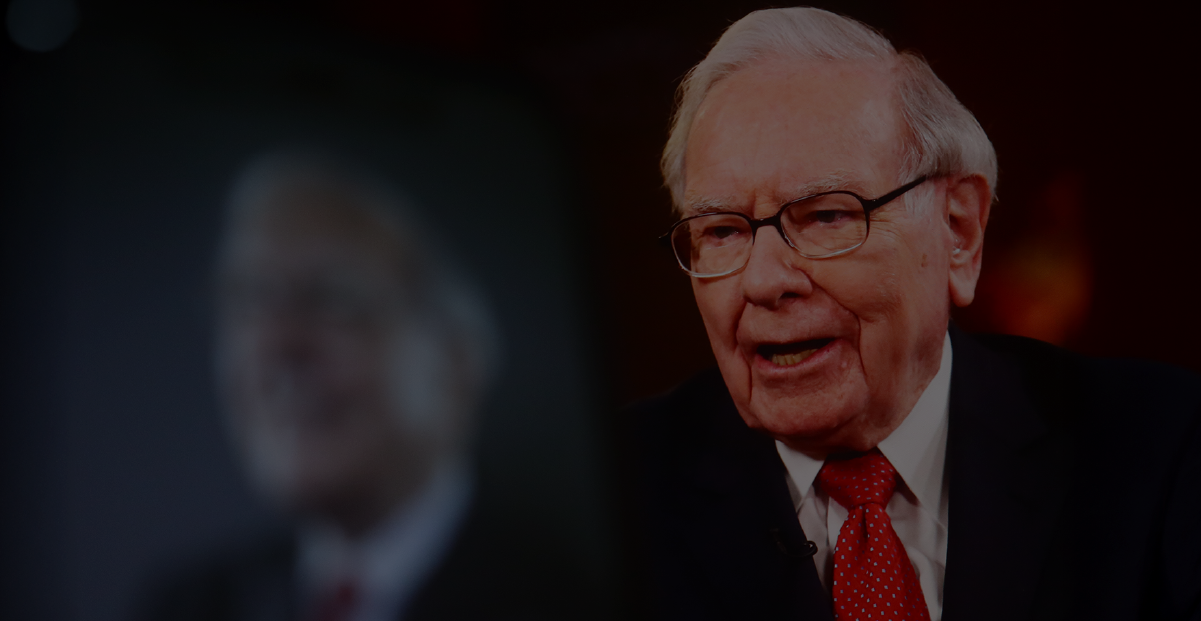
On 31st December 2025, one of the most significant transitions in financial history occurred with scant fanfare. After 55 years, Warren Buffett’s final day as chief executive of Berkshire Hathaway marked the end of an era that produced returns so extraordinary they defy conventional understanding.
The numbers tell a story of unprecedented wealth creation. Since Buffett started using Berkshire Hathaway as his investment vehicle in 1964, the company’s share price has risen more than 5,500,000%, whilst the S&P 500 returned 39,000%. Berkshire’s compounded annual return of 19.9% nearly doubled the S&P 500’s 10.4%. To put this in perspective, £1,000 invested at the end of 1964 would have been worth £55 million by the end of 2024.
Yet what makes Buffett’s achievement truly remarkable isn’t merely the magnitude of these returns, but their consistency across six decades. Since 1965, Berkshire outperformed the S&P 500 in 40 out of 60 years. More telling still, in the 13 times the S&P 500 closed lower over the past 60 years, Berkshire fell more than the benchmark only twice. This defensive characteristic speaks to the fundamental soundness of Buffett’s approach.
The investment philosophy that produced these results rests on principles so straightforward they sound simplistic, yet their rigorous application proves extraordinarily difficult. Buffett’s approach centres on buying quality businesses at reasonable prices and holding them indefinitely. As he famously stated, “Time is the friend of the wonderful business.”
Central to Buffett’s thinking is the distinction between price and value: “Price is what you pay; value is what you get”. Perhaps his most famous maxim captures the contrarian temperament required for success: “Be fearful when others are greedy and greedy when others are fearful.” The margin of safety concept, inherited from mentor Benjamin Graham, provides crucial protection against errors in judgement. As Buffett emphasised, “The three most important words in investing are margin of safety”.
Buffett’s communication with shareholders stands as perhaps his most enduring contribution beyond financial returns. Running Berkshire alongside Charlie Munger, their annual shareholder meetings became “Woodstock for capitalists”, pilgrimage destinations for investors worldwide seeking wisdom dispensed with humour and candour. His annual letters since 1965 distil complex investment concepts into plain language whilst offering sophisticated analysis that professional managers study religiously.
These investment values and philosophy align precisely with DCS’s approach. From the outset, we have tried to emulate and instil Buffett’s messages to the IFA community we work with: focus on long-term thinking over short-term speculation, prioritise business fundamentals rather than market noise, maintain discipline in valuation, and exercise patience through market cycles. These aren’t fashionable concepts that change with conditions, but timeless truths about how capital compounds over decades.
Greg Abel, the 63-year-old CEO of Berkshire’s energy business, took the helm on 1st January, whilst Buffett remains chairman. Buffett wrote to shareholders, “Greg Abel has more than met the high expectations I had for him when I first thought he should be Berkshire’s next CEO”. Abel inherits extraordinary advantages: a firm sitting on its largest-ever cash reserve of $382 billion, a portfolio of quality businesses, and a corporate culture built on trust.
Yet no successor can replicate what made Buffett unique. As Bill Stone, chief investment officer at Glenview Trust Company, observed, “If it was that easy to do again, somebody would be doing it. You think about the duo that having Charlie Munger as your partner, it’s just hard to imagine that coming together again anytime soon”.
The market’s initial response reflects this uncertainty. Following Buffett’s May announcement, Berkshire’s A shares closed at an all-time high of $809,350 the day before, then fell 14.4% to $692,600 by August before rebounding to $754,800, up almost 10.9% for 2025.
His philanthropy provides equally compelling testament to his character. In 2010, Buffett launched “The Giving Pledge” with fellow billionaires. In June, he announced donations bringing his total benefactions to more than $60 billion, distinguishing him in an era where wealth often concentrates rather than circulates.
As we begin 2026, Buffett’s investment lessons remain as relevant as ever. The principles that guided his success (buy quality businesses at reasonable prices, think long-term, stay within your circle of competence, maintain discipline) offer a reliable framework for wealth creation.
Warren Buffett’s transition from chief executive to chairman marks the formal conclusion of the most successful investment career in history. Yet his true legacy extends beyond extraordinary returns or the $1 trillion company he built. It lies in demonstrating that investment success requires neither genius nor luck, but rather patience, discipline, rationality, and adherence to sound principles applied consistently over decades. By that measure, his legacy stands unmatched.
Disclaimer: The views expressed in this article are those of the author at the date of publication and not necessarily those of Dominion Capital Strategies Limited or its related companies. The content of this article is not intended as investment advice and will not be updated after publication. Images, video, quotations from literature and any such material which may be subject to copyright is reproduced in whole or in part in this article on the basis of Fair use as applied to news reporting and journalistic comment on events.