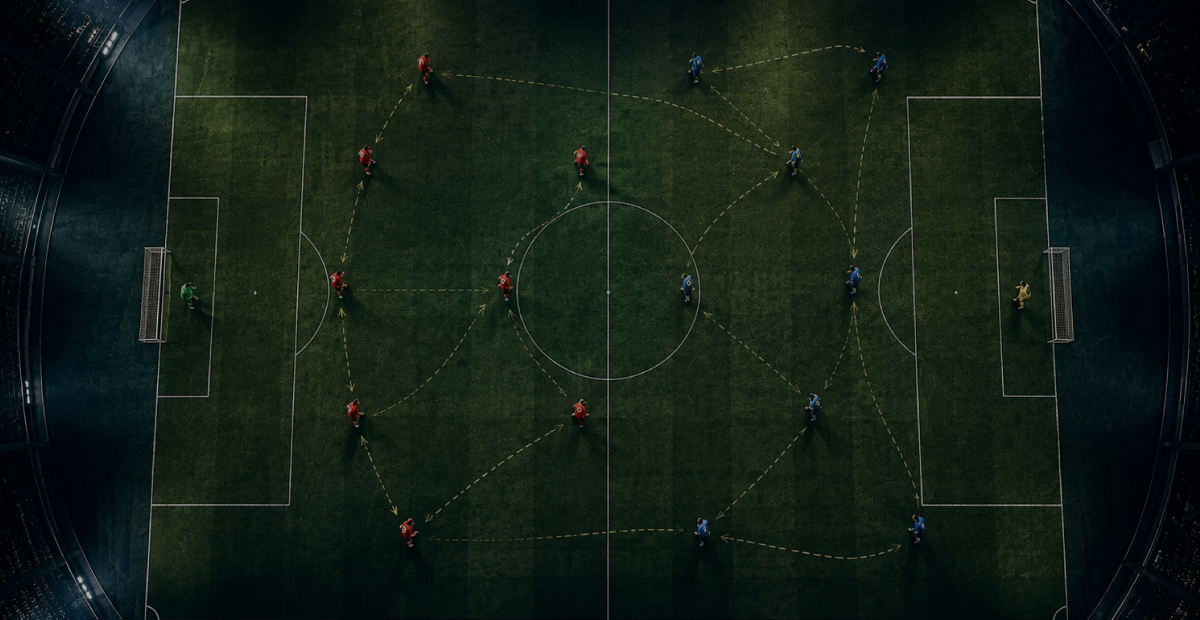
The 23rd FIFA World Cup is under way, running from 11 June to 19 July 2026 across 16 cities spanning the United States, Mexico, and Canada. For the first time in the tournament’s history, 48 teams compete for the prize, up from the 32-team format that had been in place since France 1998. Over one thousand players, dozens of nations, and one trophy. The parallel with fund management is deliberate, and it runs considerably deeper than most people recognise.
Building a winning football team requires more than talent alone, because it demands a strong spine, a coherent structure, and the right players deployed in the right positions at the right moments. A goalkeeper who attempts to play as a striker is not expressing versatility; he is creating chaos, and the same logic applies directly to portfolio construction. Core holdings provide the foundation upon which everything else is built, steady lower-volatility assets add the resilience that allows a portfolio to absorb shocks, and satellite positions, selected with care and conviction, offer the genuine prospect of standout returns. Misallocate those components and the structure collapses, regardless of how impressive the individual parts may appear in isolation.
Great teams also depend on a genuine diversity of talent, because goal scorers are rarely good defenders, and aerial dominance in the penalty box is an entirely different skill set from the quick, elusive movement that creates space in tighter areas of the pitch. A high-performing investment team works on precisely the same principle, bringing together different analytical skills, different areas of market knowledge, and different perspectives on risk that complement and challenge one another. The danger in both football and fund management is assembling a group that looks impressive on paper but lacks genuine variety, whether that means eleven forwards who cannot defend or a group of portfolio managers who think alike and share the same blind spots.
Since the inaugural tournament in 1930, only eight nations have ever lifted the World Cup, with Brazil claiming the most titles at five, and that concentration of success is not coincidental. It reflects the compounding advantage of consistent infrastructure, deep coaching traditions, and the institutional knowledge that accumulates over many decades of sustained investment in the game. Investment management works in exactly the same way, because one strong year does not make a great fund manager, just as one strong tournament does not make a great footballing nation, and what truly matters is the ability to perform across full market cycles, in favourable conditions and in genuinely difficult ones alike.
Volatility is simply the nature of the game. No team wins every match and no fund manager delivers positive performance every single month, yet nobody expects even the defending champions Argentina to progress through the group stage without incident. Markets are no different, because corrections arrive, sectors rotate, and unexpected events reshape the landscape in ways that even the most experienced investors do not always anticipate. The question is never whether volatility will occur but whether the team has been built with sufficient depth and discipline to absorb it and emerge the stronger for having done so.
Superstar players attract all of the attention, and names like Mbappé sell shirts and fill stadiums, but those individuals only perform at their highest level because of the infrastructure that surrounds them, including teammates who create the space, coaches who set the tactics, and the unseen staff who make everything function smoothly across a long and demanding tournament. In fund management, that means Operations and Compliance teams ensuring that trades are executed correctly and that regulatory obligations are met, as well as Marketing teams communicating the investment narrative clearly and compellingly to advisers and their clients. Like the physios and analysts working quietly in the background, these people never make headlines, but without them the performance simply does not happen.
As the tournament unfolds across North America over the coming weeks, the teams that go furthest will not necessarily be the ones with the most celebrated individuals on the pitch. They will be the ones with the most coherent structure, the deepest bench, and the clearest understanding of how to adapt when circumstances change and the game demands something different from them. That is what separates the great from the good, and in football, as in fund management, that distinction is everything.
Disclaimer: The views expressed in this article are those of the author at the date of publication and not necessarily those of Dominion Capital Strategies Limited or its related companies. The content of this article is not intended as investment advice and will not be updated after publication. Images, video, quotations from literature and any such material which may be subject to copyright is reproduced in whole or in part in this article on the basis of Fair use as applied to news reporting and journalistic comment on events.


